Silent GST Mistakes That Can Trigger Scrutiny Notices and Heavy Penalties in 2026: Top 10 Compliance Errors Every Business Must Avoid.
Avoid costly GST scrutiny notices in 2026. Learn the top 10 silent GST compliance mistakes that trigger ASMT-10 notices under Section 61, along with expert compliance tips from Intellex Strategic Consulting Pvt. Ltd.
The Goods and Services Tax (GST) compliance environment has become increasingly technology-driven. Artificial intelligence, automated data analytics, and real-time reconciliation now enable tax authorities to identify discrepancies almost instantly.
Today, businesses are no longer scrutinized only during departmental audits. Instead, automated system-generated notices under Section 61 of the CGST Act are being issued based on mismatches detected across GST returns, financial statements, e-invoices, e-way bills, and income tax filings.
Many businesses believe they are GST compliant simply because returns are filed on time. However, several seemingly minor compliance lapses can silently accumulate and eventually trigger Form GST ASMT-10, leading to interest, penalties, and prolonged litigation.
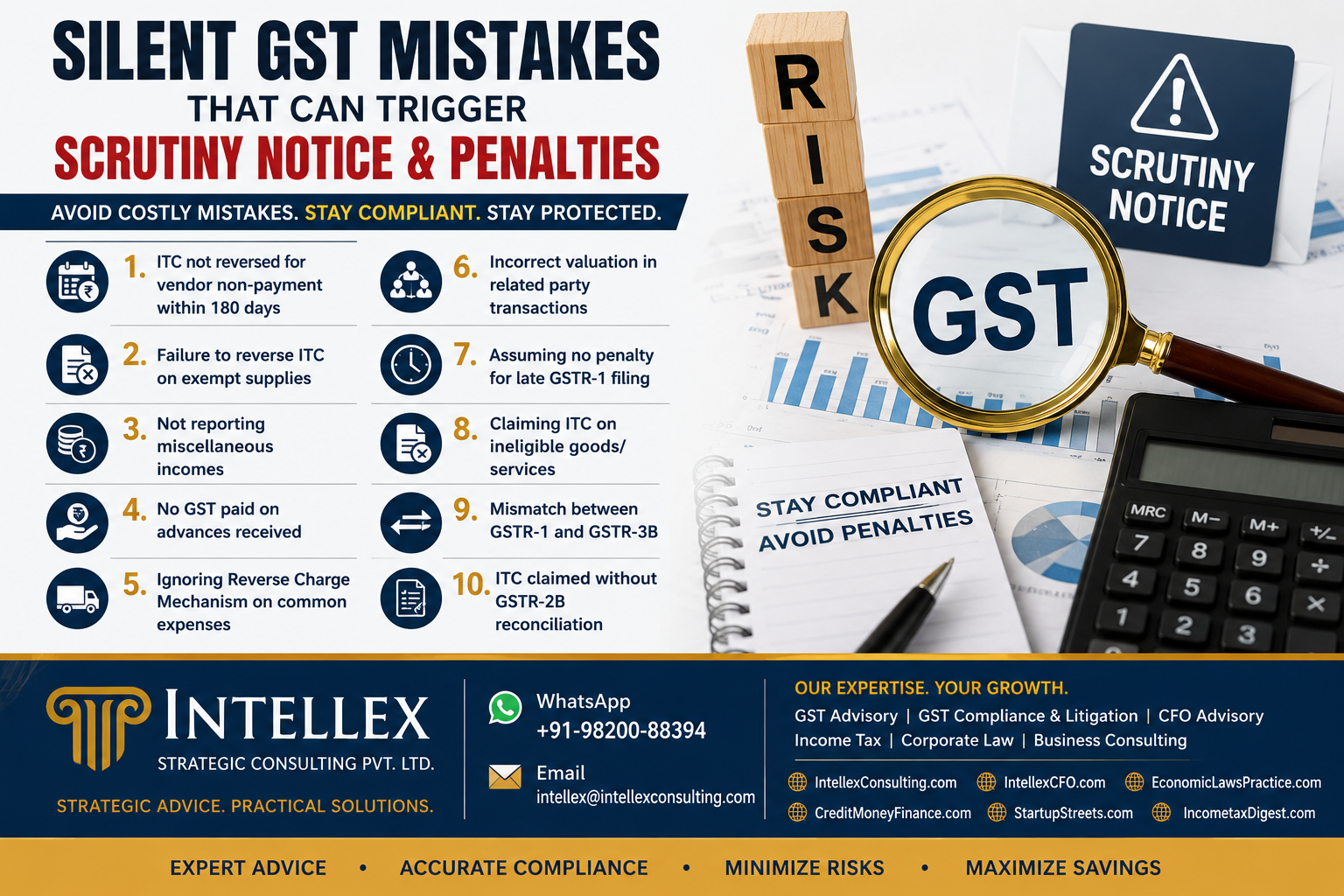
Below are the ten most common GST mistakes that businesses should address immediately.
1. Failure to Reverse ITC When Vendor Payment Is Not Made Within 180 Days
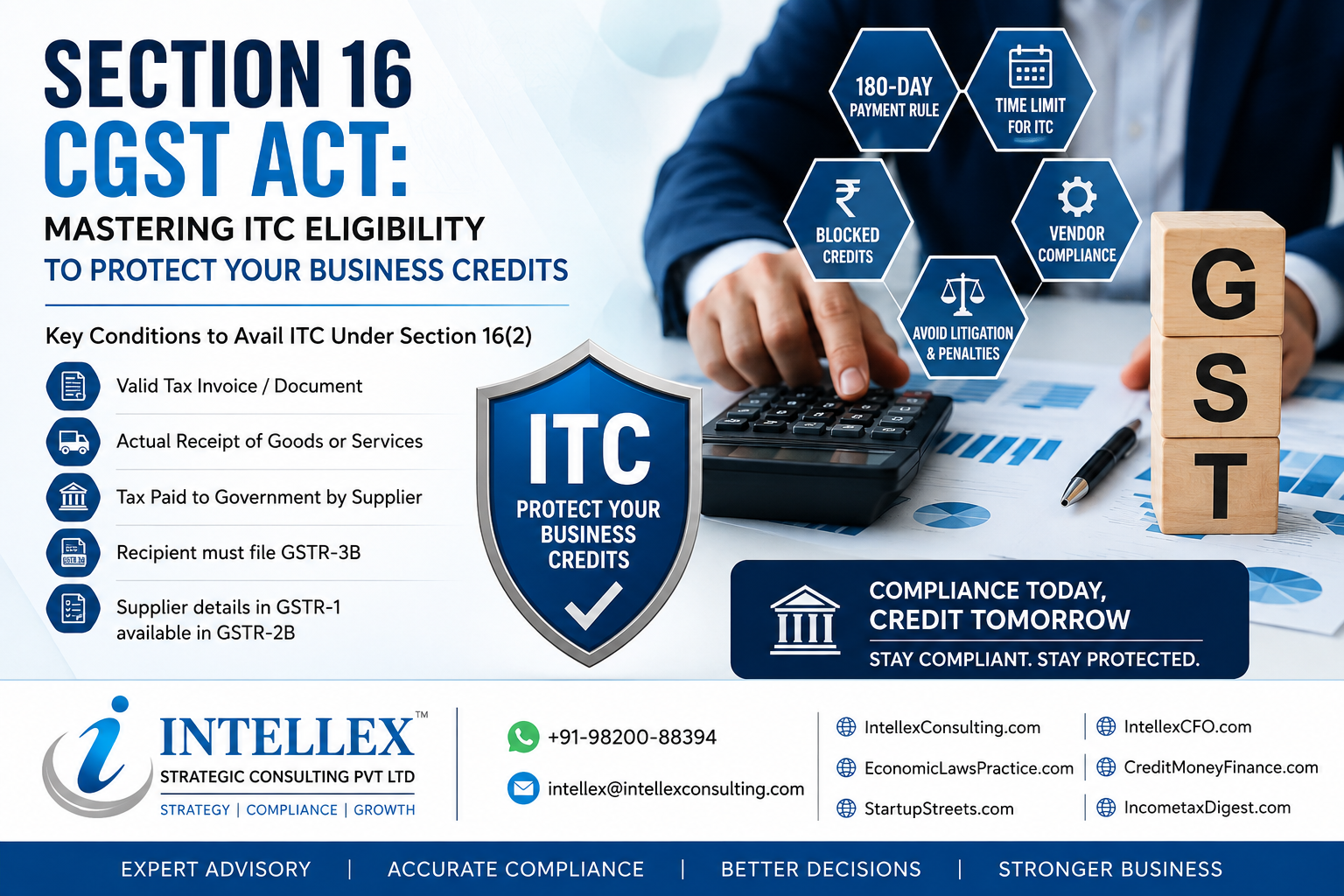
One of the most overlooked provisions under GST is contained in Section 16(2).
If payment to a supplier is not made within 180 days from the invoice date, the recipient must reverse the corresponding Input Tax Credit (ITC) along with applicable interest.
The ITC can be reclaimed only after the supplier is actually paid.
Many businesses fail to monitor outstanding creditors, making this one of the most common audit observations during GST scrutiny.
Compliance Tip
- Periodically review creditor ageing reports.
- Reverse ITC wherever required.
- Reclaim ITC immediately after payment is made.
2. Non-Reversal of ITC on Exempt Supplies
Businesses engaged in both taxable and exempt supplies cannot claim the entire ITC.
Under Rules 42 and 43 of the CGST Rules, proportionate reversal of common Input Tax Credit is mandatory for:
- Common input services
- Common inputs
- Capital goods used for both taxable and exempt activities
Failure to compute these reversals correctly often results in additional tax demands together with interest and penalties.
3. Ignoring Miscellaneous Income While Reporting GST
Several businesses report GST only on their core business revenue while ignoring incidental income.
Common examples include:
- Scrap sales
- Commission income
- Foreign exchange gains (where taxable)
- Recovery of expenses
- Penalties recovered
- Sale of fixed assets
- Insurance recoveries (where taxable)
Since GST returns are increasingly compared with financial statements and Income Tax Returns, such omissions can trigger automated notices.
4. GST Not Paid on Advances Received
For many categories of services and certain notified goods, GST becomes payable upon receipt of advances.
Businesses frequently record advances in their books but fail to disclose them appropriately in GSTR-1 and GSTR-3B, creating mismatches between GST filings and audited financial statements.
Regular reconciliation of advances is therefore essential.
5. Ignoring Reverse Charge Mechanism (RCM)
Reverse Charge continues to remain one of the highest-risk areas during GST audits.
Common transactions attracting RCM include:
- Goods Transport Agency (GTA) services
- Legal services from advocates
- Import of services
- Certain rent payments
- Director remuneration (subject to applicable provisions)
- Other notified supplies under Sections 9(3) and 9(4)
Failure to discharge GST under Reverse Charge may also result in denial or delay of ITC along with interest and penalties.
6. Incorrect Valuation of Related Party Transactions
Transactions between:
- Sister concerns
- Branches
- Group companies
- Director-controlled entities
must comply with Rule 28 relating to valuation.
Where consideration is absent or understated, GST authorities may determine the taxable value based on:
- Open Market Value
- Value of like kind and quality
- Prescribed valuation methods, including the 90% resale value rule where applicable
Incorrect valuation often attracts tax demands and interest.
7. Assuming There Is No Consequence for Delayed GSTR-1 Filing
Many taxpayers assume that because the GST portal may not levy a late fee in certain situations, delayed filing of GSTR-1 has no repercussions.
However, delayed or inaccurate filing can still result in:
- Notices under Section 46
- Penalties under Section 122
- Mismatches with e-Invoices and GSTR-3B
- Customer ITC disputes
Timely filing remains critical for smooth compliance.
8. Claiming Blocked Input Tax Credit
Section 17(5) specifically blocks ITC on various goods and services.
Commonly disallowed credits include:
- Motor vehicles (subject to specified exceptions)
- Club memberships
- Personal expenses
- Free gifts
- Employee welfare expenses in certain situations
Businesses often continue claiming these credits inadvertently, resulting in reversals with interest during departmental scrutiny.
9. Mismatch Between GSTR-1 and GSTR-3B
One of the largest contributors to GST scrutiny today is mismatch between outward supplies reported in GSTR-1 and tax paid through GSTR-3B.
Typical mismatches include:
- Higher sales reported in GSTR-1 than GSTR-3B
- ITC claimed in excess of eligible credit
- Incorrect tax liability reporting
- Classification errors
Automated analytics identify these discrepancies almost immediately, making reconciliation indispensable.
10. Claiming ITC Without Proper GSTR-2B Reconciliation
Input Tax Credit should always be reconciled with GSTR-2B before filing returns.
Common mistakes include:
- Claiming invoices not reflected in GSTR-2B
- Claiming ITC where suppliers have delayed filing
- Claiming ITC after supplier registration has been cancelled
- Duplicate ITC claims
Routine monthly reconciliation significantly reduces compliance risks.
How GST Scrutiny Works
The GST Department increasingly relies on automated analytics to detect inconsistencies.
The typical process is:
- Discrepancy identified through system analytics.
- Issue of Form GST ASMT-10 under Section 61.
- Taxpayer must respond through Form GST ASMT-11 within 30 days (or such extended period as permitted).
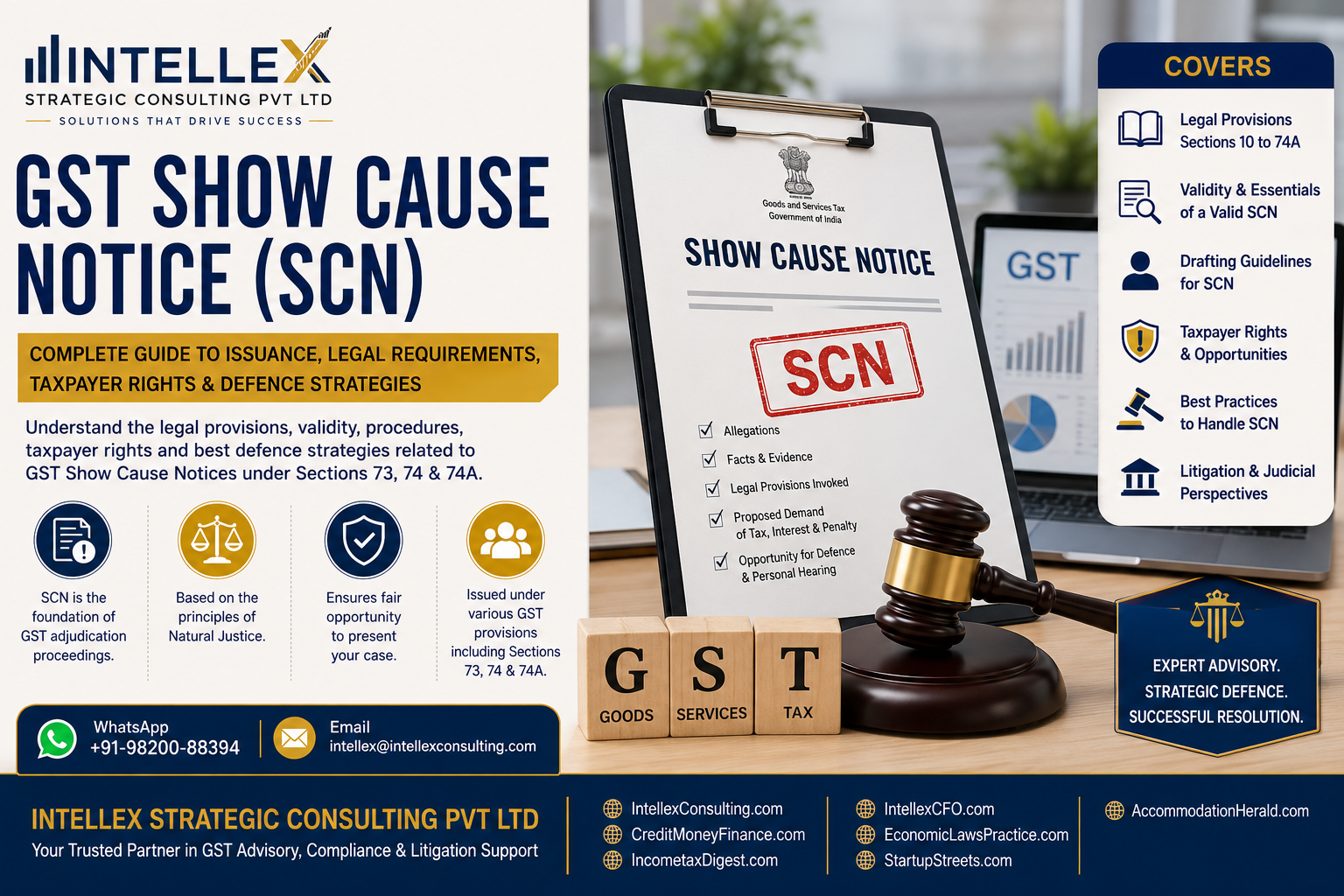
- If the explanation is unsatisfactory or no reply is filed, the department may initiate proceedings under the applicable demand and recovery provisions, including Sections 73, 74, or 74A, depending on the facts and the relevant legal framework.
A well-documented and timely response is crucial to avoid escalation.
Best Practices to Avoid GST Scrutiny
Businesses should implement the following controls:
- Conduct monthly GST health checks.
- Reconcile GSTR-1, GSTR-3B and GSTR-2B every month.
- Review vendor payments exceeding 180 days.
- Verify Reverse Charge applicability regularly.
- Perform annual Rule 42 and Rule 43 computations.
- Reconcile GST returns with audited financial statements.
- Maintain complete documentation supporting ITC claims.
- Undertake periodic internal GST audits.
Conclusion
GST compliance has evolved from return filing to continuous data validation. Today, automated systems compare GST returns with e-invoices, e-way bills, financial statements, Income Tax records, and supplier filings. Consequently, even small compliance gaps can result in scrutiny notices, interest, penalties, and prolonged litigation.
Businesses should therefore adopt a proactive compliance strategy by conducting periodic reconciliations, reviewing internal controls, and addressing discrepancies before they are identified by the tax authorities. Preventive compliance is significantly more cost-effective than responding to assessments and disputes after a notice has been issued.
Need Professional GST Advisory or Notice Handling Assistance?
Intellex Strategic Consulting Pvt. Ltd. provides end-to-end GST compliance and litigation support, including:
- GST Health Check & Compliance Reviews
- GST Return Reconciliation (GSTR-1, GSTR-3B & GSTR-2B)
- GST Scrutiny Notice (ASMT-10) Response
- GST Audit & Assessment Support
- Input Tax Credit Advisory
- Reverse Charge Compliance
- GST Litigation & Appeals
- CFO Advisory & Virtual CFO Services
- Income Tax, Corporate Law & Regulatory Compliance
Contact Us
Intellex Strategic Consulting Pvt. Ltd.
📱 WhatsApp: +91-98200-88394
📧 Email: intellex@intellexconsulting.com
🌐 Websites:
- IntellexConsulting.com
- IntellexCFO.com
- EconomicLawsPractice.com
- CreditMoneyFinance.com
- StartupStreets.com
- IncometaxDigest.com
Stay compliant. Stay audit-ready. Protect your business from avoidable GST notices with expert guidance from Intellex Strategic Consulting Pvt. Ltd.
One thought on “Silent GST Mistakes That Can Trigger Scrutiny Notices and Heavy Penalties in 2026: Top 10 Compliance Errors Every Business Must Avoid.”