New RBI Rules 2026: Complete Guide to Digital Payments E-Mandate Framework for Cards, UPI & PPIs.
Understand the latest RBI e-mandate rules 2026 for recurring payments via UPI, cards, and wallets. Learn transaction limits, AFA requirements, user rights, compliance, and business impact.
Introduction: A Major Shift in India’s Digital Payments Ecosystem
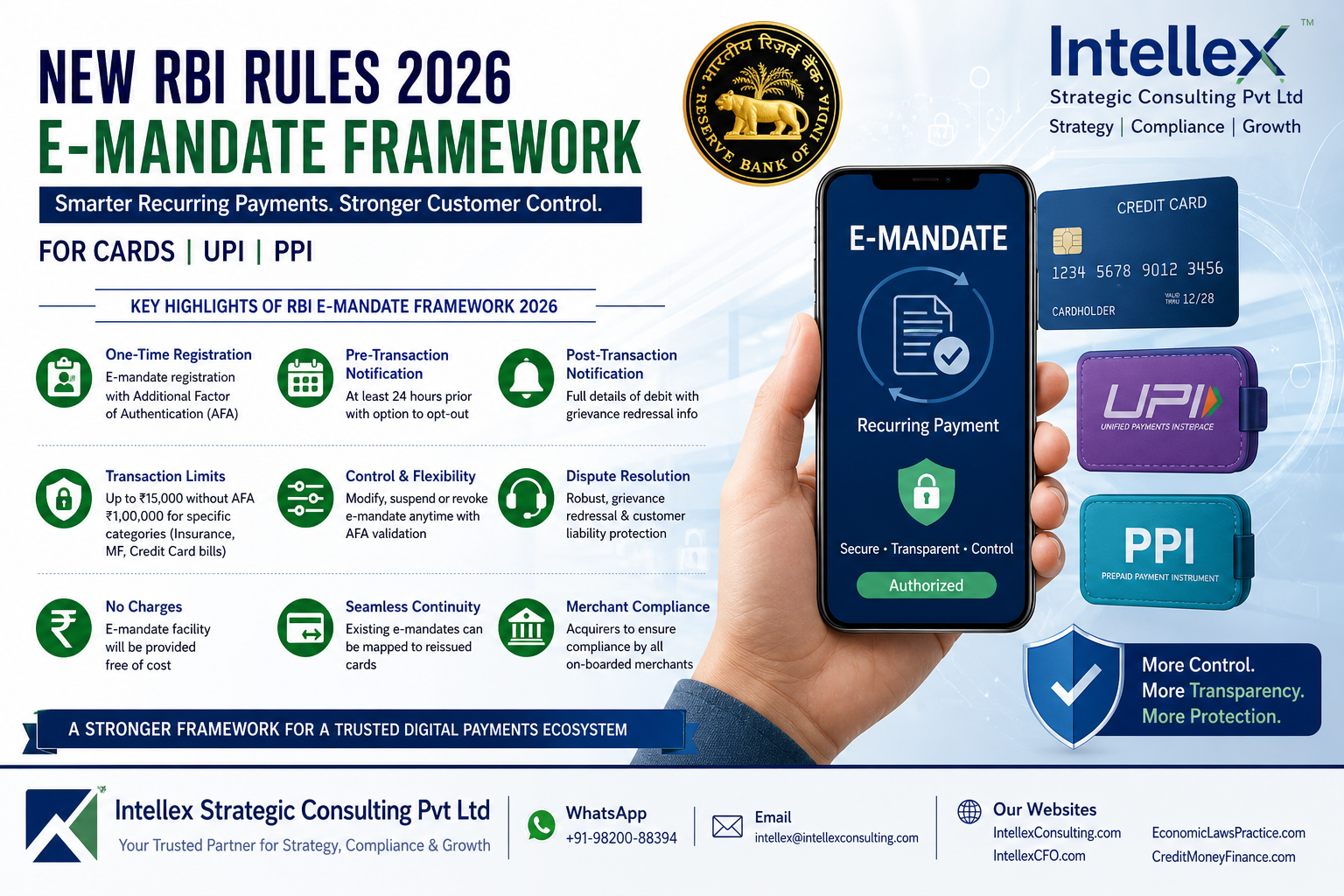
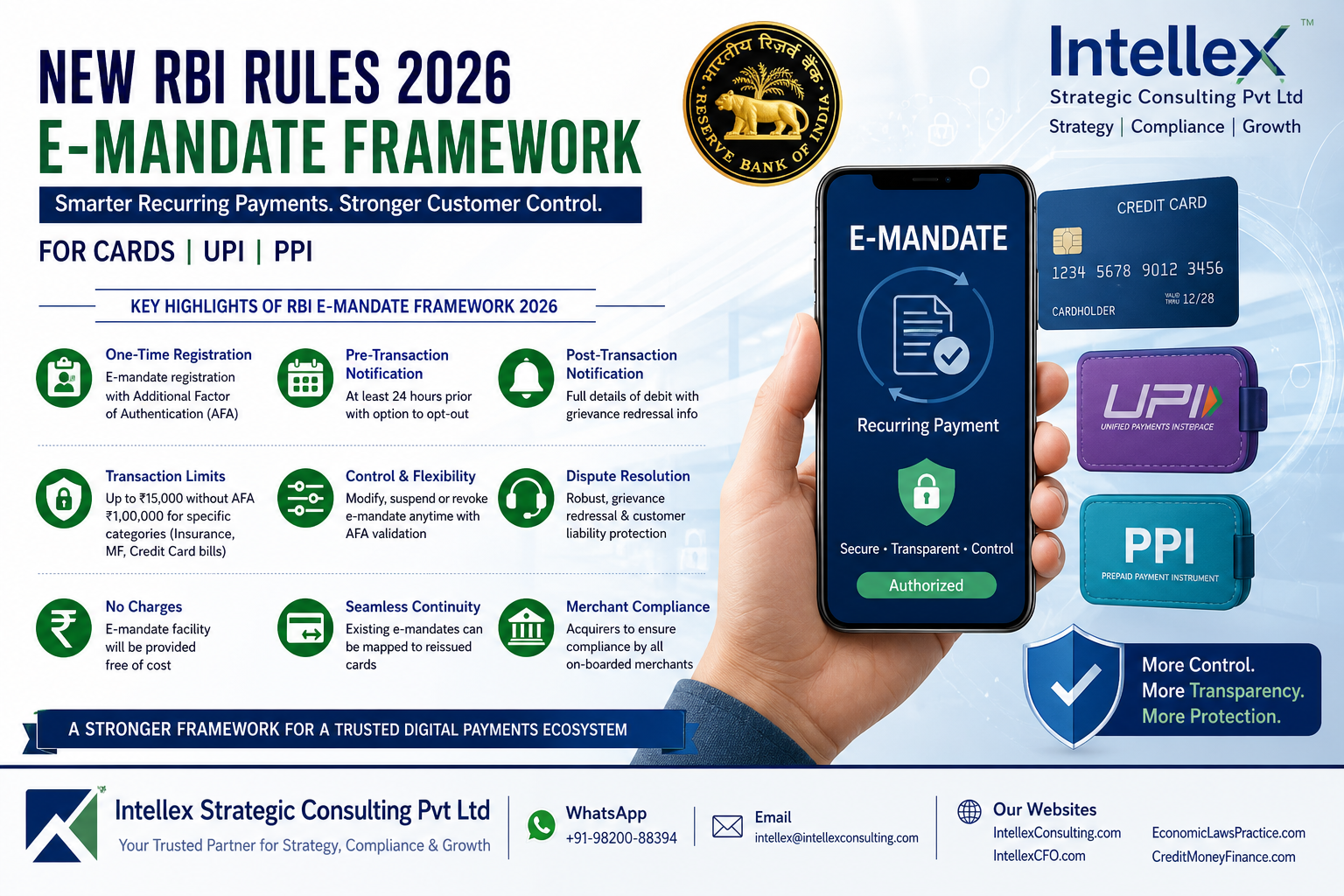
The Reserve Bank of India (RBI) has introduced a consolidated and enhanced framework for e-mandates governing recurring digital payments across Cards, Prepaid Payment Instruments (PPIs), and UPI. These updated rules, effective immediately in 2026, are designed to strengthen customer control, transparency, and security while ensuring seamless automated transactions.
As India continues its rapid digital transformation, these regulations aim to balance user convenience with robust fraud protection, addressing long-standing concerns around unauthorized auto-debits and lack of visibility.
1. Registration and Revocation of E-Mandates
The foundation of the new framework lies in giving customers full lifecycle control over their mandates.
A customer must complete a one-time registration process, which is validated using Additional Factor of Authentication (AFA). This ensures that no mandate is created without explicit consent.
Each e-mandate must clearly define its validity period, and customers can modify or revoke it at any time. Importantly, any such change also requires AFA validation, maintaining security throughout.
Customers can:
- Choose between fixed or variable payment mandates
- Set maximum transaction limits for variable debits
- Select preferred notification modes such as SMS or email
This ensures a shift from passive subscription models to active user-controlled payment ecosystems.
2. Processing of Transactions: First and Recurring
The first transaction always requires AFA authentication, establishing a secure baseline. If the first debit occurs during registration, the authentication process can be combined.
For subsequent recurring payments:
- Transactions within permitted limits can be processed without repeated AFA
- This ensures frictionless experience while maintaining safeguards
The RBI has clarified that such transactions are not subject to additional user-defined controls beyond the mandate terms, reinforcing the importance of careful setup.
3. Pre-Transaction Notifications: Transparency Before Debit
One of the most impactful features of the new framework is the mandatory pre-debit alert system.
Customers must receive a notification at least 24 hours before the transaction, detailing:
- Merchant name
- Transaction amount
- Debit date and time
- Mandate reference number
- Purpose of debit
Crucially, users are given the ability to:
- Opt out of a specific transaction
- Cancel the mandate entirely
Any such action must be authenticated via AFA, ensuring secure intervention.
However, exceptions apply for:
- FASTag auto-recharges
- National Common Mobility Card (NCMC) top-ups
These exemptions recognize the need for uninterrupted utility services.
4. Post-Transaction Notifications: Complete Audit Trail
After every debit, customers receive a post-transaction notification, ensuring full transparency.
This includes:
- Merchant details
- Amount debited
- Date and time
- Transaction and mandate reference numbers
- Reason for debit
- Grievance redressal information
This creates a clear audit trail, empowering users to quickly identify and act on discrepancies.
5. Transaction Limits and AFA Thresholds
The RBI has rationalized transaction thresholds to strike a balance between security and convenience.
- Up to ₹15,000 per transaction: No AFA required
- Above ₹15,000: AFA mandatory
For specific categories:
- Insurance premiums
- Mutual fund subscriptions
- Credit card bill payments
A higher threshold of ₹1,00,000 per transaction without AFA is permitted.
This tiered structure supports both everyday subscriptions and high-value financial commitments.
6. Dispute Resolution and Customer Protection
The framework mandates issuers to establish robust grievance redressal mechanisms.
Customers are protected under RBI’s existing rules on:
- Limiting liability in unauthorized transactions
- Timely resolution of disputes
This ensures that recurring payments do not expose users to unchecked financial risks.
7. Additional Key Provisions
Several operational enhancements further strengthen the framework:
- No charges for availing e-mandate services
- Existing mandates can be mapped to reissued cards, avoiding disruption
- Acquirers must ensure merchant compliance, extending accountability across the ecosystem
These measures ensure both consumer protection and systemic integrity.
Impact Analysis: What This Means for Stakeholders
For Consumers
The new rules bring unprecedented control, allowing users to:
- Avoid hidden or forgotten subscriptions
- Monitor and manage recurring payments easily
- Reduce risk of fraud and unauthorized debits
For Businesses & Fintech Platforms
Companies must:
- Upgrade systems to support AFA, notifications, and opt-out mechanisms
- Ensure seamless user experience while staying compliant
- Rework subscription models to align with transparency norms
For Banks and Payment Aggregators
They must:
- Implement real-time notification systems
- Strengthen backend infrastructure
- Ensure compliance across merchant networks
Compliance Challenges and Practical Considerations
While the framework is progressive, implementation requires:
- Integration of real-time communication systems
- Enhanced customer data management
- Stronger authentication infrastructure
Non-compliance could lead to transaction failures, customer dissatisfaction, and regulatory penalties.
Conclusion: A User-Centric Digital Payment Future
The RBI’s 2026 e-mandate framework represents a significant evolution in India’s digital payments landscape. By embedding transparency, consent, and control into recurring payments, it builds a system that is both secure and user-friendly.
For businesses, the message is clear: compliance is no longer optional, and customer trust is the new currency.
Professional Support & Advisory
For businesses, fintech companies, and financial professionals seeking guidance on implementing RBI e-mandate compliance, structuring digital payment systems, or managing regulatory risks:
Intellex Strategic Consulting Pvt Ltd
📱 WhatsApp: +91-98200-88394
📧 Email: intellex@intellexconsulting.com
🌐 Websites:
IntellexConsulting.com
IntellexCFO.com
EconomicLawsPractice.com
They offer expert advisory in financial regulations, compliance frameworks, fintech structuring, and strategic consulting, helping organizations stay ahead in an evolving regulatory environment.
Intellex Strategic Consulting Pvt Ltd
More Featured Articles:
Startup India Registration: Unlocking Tax Benefits and Growth
Funding & Investment Options to Grow India’s Real Estate & Allied Businesses