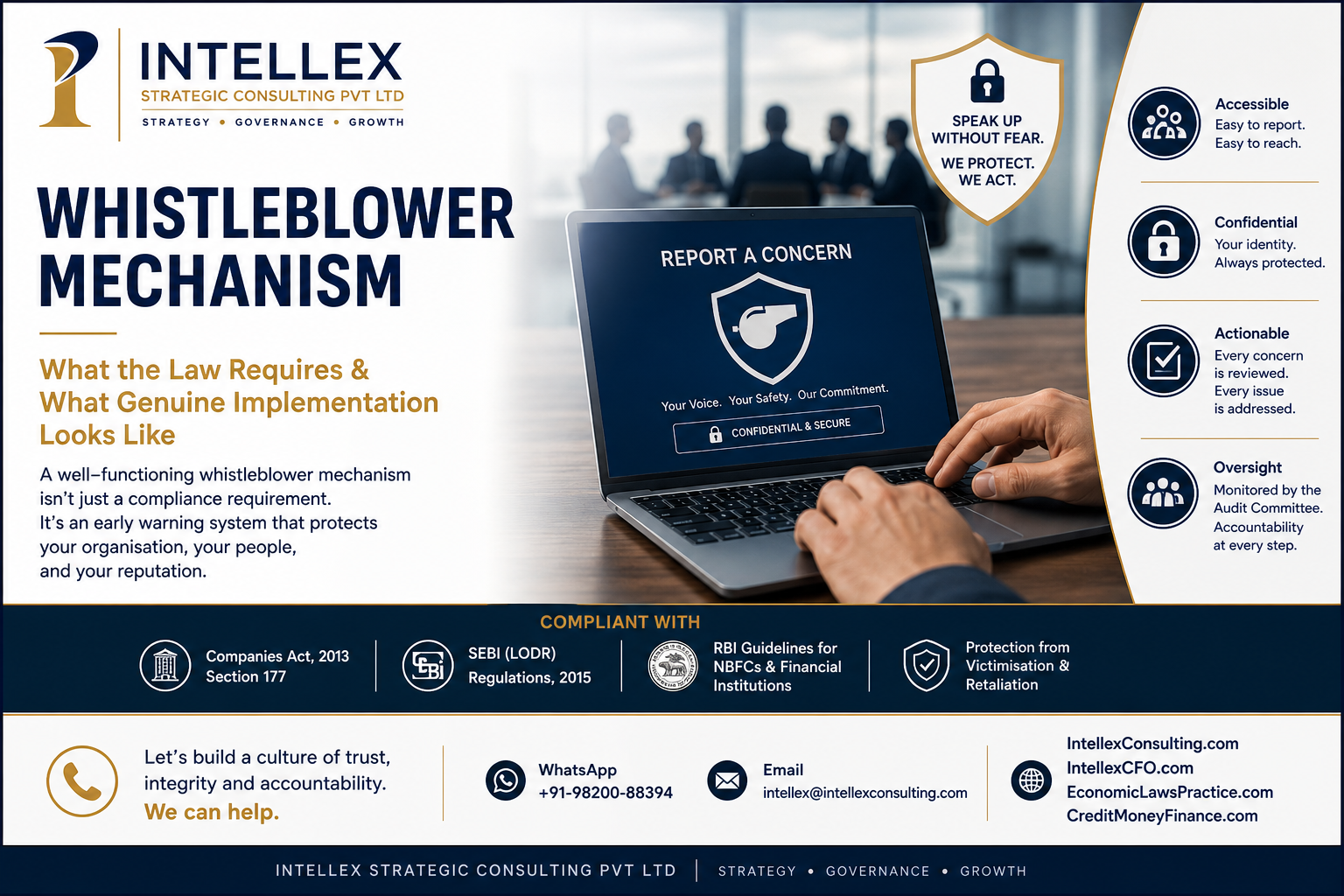
Whistleblower Mechanism in India: Legal Requirements, Practical Challenges & What Genuine Implementation Really Looks Like.
A complete guide to Whistleblower (Vigil) Mechanism under the Companies Act 2013, SEBI LODR & RBI norms. Learn legal requirements, best practices, and how to implement an effective whistleblower policy in India.
Introduction
A Whistleblower Mechanism—also referred to as a Vigil Mechanism under Indian corporate law is a cornerstone of modern corporate governance. While most organisations today formally comply with the requirement, the difference between existence and effectiveness remains stark.
On paper, policies are abundant. In practice, trust, accessibility, and actionability determine whether the mechanism truly works.
This article explores:
- Legal framework governing whistleblower mechanisms in India
- Regulatory expectations across sectors
- Practical implementation challenges
- What a genuinely effective system looks like
Legal Framework Governing Whistleblower Mechanism in India
1. Companies Act, 2013 — Section 177
Under Section 177 of the Companies Act, 2013:
- Mandatory for:
- Listed companies
- Certain prescribed classes of companies
- Key Requirements:
- Establish a Vigil Mechanism for directors and employees
- Provide safeguards against victimisation
- Enable direct access to the Chairperson of the Audit Committee in exceptional cases
- Ensure proper disclosure on company website and Board Report
2. SEBI (LODR) Regulations, 2015
For listed entities:
- Mandatory Whistleblower Policy
- Protection against unfair treatment or retaliation
- Requirement to affirm that no personnel has been denied access to the Audit Committee
- Periodic reporting to the Board/Audit Committee
3. RBI Guidelines (For NBFCs & Financial Institutions)
The Reserve Bank of India expects:
- Robust internal governance frameworks
- Structured grievance redressal and whistleblower systems
- Integration with risk management and compliance functions
Why Most Whistleblower Mechanisms Fail in Practice
Despite regulatory compliance, many systems fail because:
- Employees don’t trust confidentiality
- Reporting channels are unclear or inaccessible
- Management treats complaints as formalities
- Lack of timely investigation and closure
- Fear of retaliation or career impact
A non-functional mechanism is not neutral—it is actively harmful, as it discourages future reporting.
What Genuine Implementation Looks Like
A truly effective whistleblower mechanism is not defined by documentation—but by outcomes and behaviour.
1. Genuine Accessibility
A working system ensures:
- Every employee is aware of the mechanism
- Multiple reporting channels:
- Hotline
- Web-based portals
- Easy-to-understand communication (not legal jargon)
Best Practice:
Periodic awareness sessions, onboarding training, and visible communication campaigns.
2. Genuine Confidentiality
Trust is the backbone of whistleblowing.
A robust system must:
- Protect identity (including anonymous reporting where feasible)
- Restrict access to information on a need-to-know basis
- Use secure systems to prevent data leaks
Without confidentiality, usage drops to near zero.
3. Genuine Action & Accountability
The most critical element.
A credible mechanism ensures:
- Prompt acknowledgment of complaints
- Independent investigation (internal or external)
- Proper documentation and closure
- Escalation to Audit Committee/Board when necessary
A system that records complaints but takes no action is worse than having none—it creates institutional apathy.
Role of the Audit Committee
The Audit Committee plays a central role by:
- Reviewing whistleblower complaints periodically
- Ensuring independence of investigation
- Monitoring trend analysis and systemic issues
- Providing direct access in exceptional cases
Key Indicators of an Effective Whistleblower Framework
Organisations should periodically assess:
- Number of complaints received (too low can indicate fear/lack of awareness)
- Nature and severity of issues reported
- Resolution timelines
- Employee awareness levels
- Repeat issues or systemic gaps
Common Mistakes Companies Must Avoid
- Treating the mechanism as a checkbox compliance
- Limiting access only to senior employees
- Ignoring anonymous complaints
- Delayed or biased investigations
- Lack of Board/Audit Committee oversight
Strategic Importance of Whistleblower Mechanism
A well-functioning whistleblower system acts as:
- Early warning system for fraud and misconduct
- Tool for strengthening internal controls
- Enhancer of ethical culture
- Confidence builder for investors and stakeholders
In many global corporate failures, early signals existed—but were ignored.
Best Practices for Indian Companies
- Implement third-party managed whistleblower platforms
- Allow anonymous reporting with tracking ID
- Conduct quarterly reporting to Audit Committee
- Integrate with internal audit and risk frameworks
- Provide anti-retaliation assurance backed by action
Conclusion
A whistleblower mechanism is not merely a legal requirement—it is one of the most powerful governance tools available to an organisation.
The real question is not:
“Do we have a whistleblower policy?”
But:
“Do people trust it enough to use it?”
A system that is accessible, confidential, and responsive can prevent small issues from becoming major crises—protecting not just the company, but every stakeholder connected to it.
How Intellex Strategic Consulting Pvt Ltd Can Help
At Intellex Strategic Consulting Pvt Ltd, we assist organisations in designing, reviewing, and strengthening whistleblower and governance frameworks aligned with regulatory requirements and global best practices.
Our Services Include:
- Drafting and reviewing Whistleblower/Vigil Policies
- Setting up secure reporting mechanisms
- Audit Committee advisory & governance structuring
- Compliance with Companies Act, SEBI LODR & RBI norms
- Periodic effectiveness reviews
📞 WhatsApp: +91-98200-88394
📧 Email: intellex@intellexconsulting.com
🌐 Websites:
- IntellexConsulting.com
- IntellexCFO.com
- EconomicLawsPractice.com
- CreditMoneyFinance.com
Intellex Strategic Consulting Pvt Ltd
More Featured Articles:
Ultimate Guide to Singapore Company Registration 2026: Rules, Costs, and Compliance.
The Ultimate Guide to Company Registration in Dubai 2026: Benefits, Compliance, and Costs.
ESOP Compliance in India: A Complete Guide for Compliance Professionals (2026 Edition).

One thought on “Whistleblower Mechanism in India: Legal Requirements, Practical Challenges & What Genuine Implementation Really Looks Like.”