GST Notice Threshold Proposal: A Game-Changer for Taxpayers and MSMEs in India.
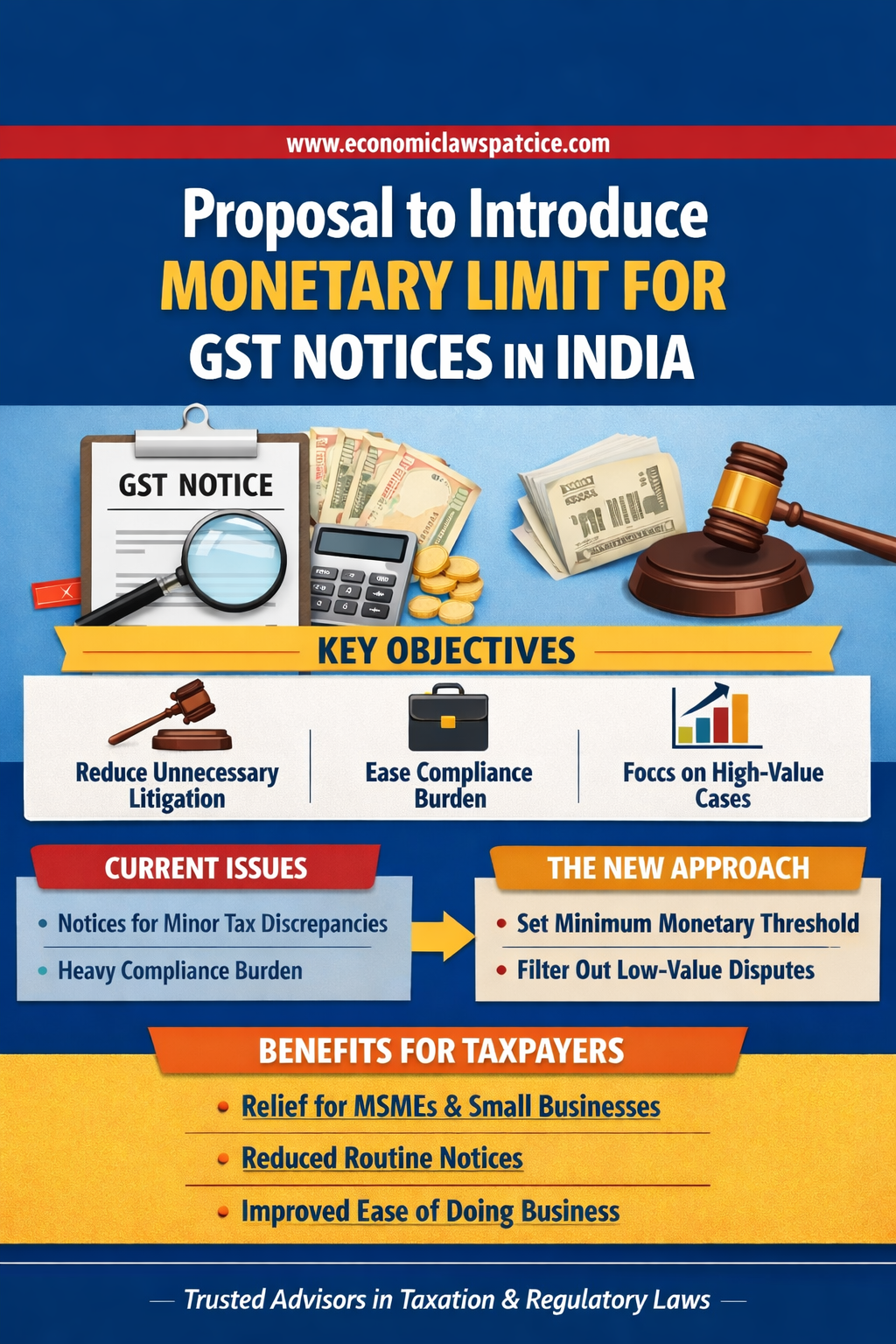
Proposal to introduce monetary limits for GST notices in India. Learn how this CBIC reform will reduce litigation, ease compliance, and benefit MSMEs while maintaining tax discipline.
India’s indirect tax ecosystem may soon witness a meaningful transformation as the Central Board of Indirect Taxes and Customs (CBIC) considers introducing a monetary threshold for issuing GST notices. This proposal reflects a progressive shift toward smarter tax administration, aiming to reduce litigation, ease compliance burdens, and enhance overall efficiency in the GST regime.
Why This Reform Matters
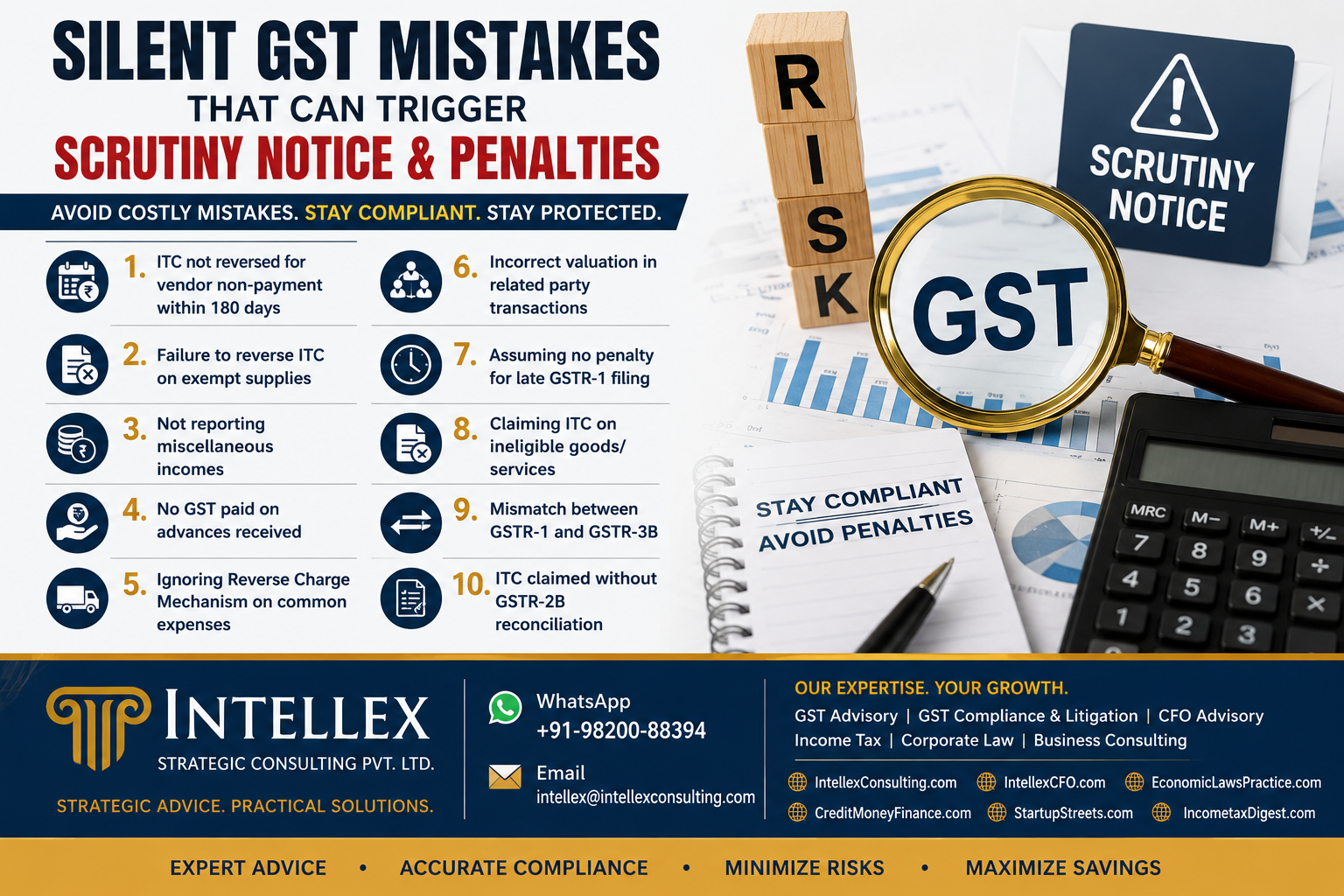
Under the current GST framework, even minor discrepancies often trigger Show Cause Notices (SCNs). Businesses frequently receive notices for small mismatches between returns such as GSTR-1 and GSTR-3B or minor Input Tax Credit (ITC) differences. While technically valid, these notices create disproportionate compliance stress relative to the financial impact involved.
This leads to:
- Increased administrative burden for businesses
- Higher professional costs for consultants
- Resource diversion within the tax department
The proposed reform seeks to address this inefficiency by introducing a minimum monetary limit, below which notices may not be issued.
What the Proposed GST Monetary Limit Means
If implemented, the CBIC would filter out low-value disputes, allowing tax officers to prioritize cases involving:
- Significant tax evasion
- High-value discrepancies
- Structured fraud or compliance risks
This marks a transition from a volume-based enforcement system to a value-based approach, improving both fairness and efficiency.
Big Relief for MSMEs and Small Businesses
Micro, Small, and Medium Enterprises (MSMEs) stand to benefit the most from this reform. Small businesses often face repeated notices due to:
- Clerical errors
- Timing differences in reporting
- Minor reconciliation issues
With a monetary threshold in place:
- Unnecessary notices and penalties will reduce
- Compliance anxiety will decrease
- Operational focus can shift back to business growth
This aligns strongly with India’s broader goal of improving ease of doing business.
Not a Free Pass: Compliance Still Matters
It is important to understand that this proposal does not imply immunity for small discrepancies. The GST system continues to evolve with advanced technologies such as:
- Data analytics
- AI-based risk assessment
- Pattern recognition tools
Repeated small mismatches may still trigger scrutiny if they indicate systemic non-compliance. Therefore, maintaining accurate records and proper reconciliation remains critical.
Learning from the Income Tax Framework
A similar concept already exists under the Income Tax Act, 1961, where monetary limits are applied to:
- Appeals
- Litigation thresholds
This has helped reduce the backlog of cases and allowed authorities to focus on high-impact matters. Extending this principle to GST demonstrates a policy alignment across tax systems.
Impact on GST Professionals and Consultants
For tax professionals, this reform signals a shift in role and value proposition. Routine tasks such as replying to low-value notices may decline, giving way to:
- Strategic tax advisory
- Risk assessment services
- Compliance optimization
- Litigation strategy for high-value cases
This transition strengthens the profession by emphasizing expertise over repetitive compliance work.
A Structural Reform in the Making
The proposal to introduce a monetary limit for GST notices represents a forward-looking structural reform in India’s tax administration. By reducing unnecessary litigation and improving departmental efficiency, it creates a more balanced ecosystem for both taxpayers and authorities.
However, businesses must continue to:
- Maintain proper documentation
- Conduct regular reconciliations
- Ensure accurate GST filings
A disciplined compliance approach will remain the foundation of long-term tax stability.
Team: EconomicLawsPractice.com
More Featured Posts:
Startup India Registration: Unlocking Tax Benefits and Growth

3 thoughts on “GST Notice Threshold Proposal: A Game-Changer for Taxpayers and MSMEs in India.”